
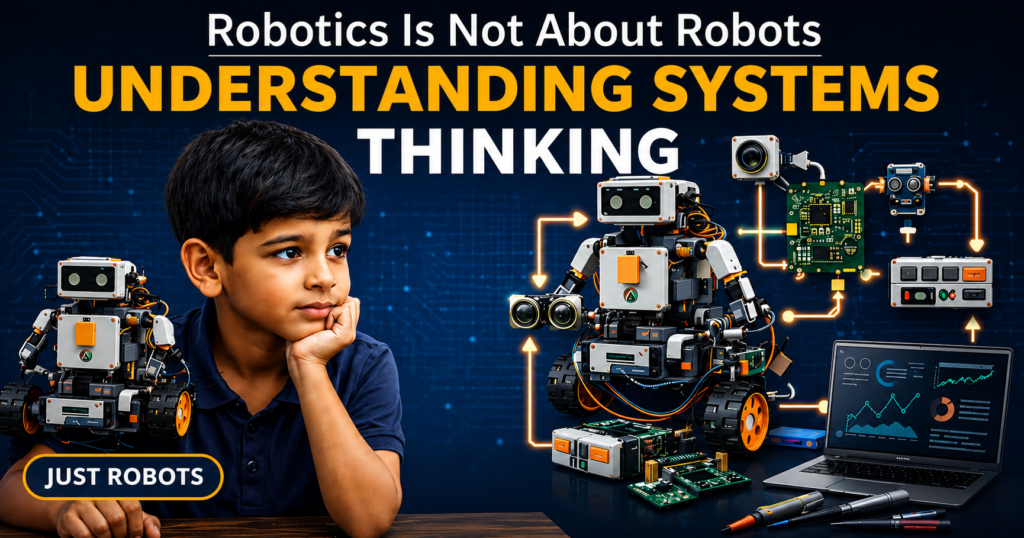
When people hear the word robotics, the first image that comes to mind is usually a machine—something that moves, follows commands, or performs a task.
But here’s the truth most schools and parents overlook:
Robotics is not really about robots.
It’s about how systems work together.
And that shift in understanding makes all the difference.
Looking Beyond the Machine
In many schools, robotics is introduced as an activity. Students build a robot, make it move, maybe add a sensor—and that’s considered learning.
But if you ask a simple question like, “What is actually making this robot work?”, the answers often stay limited to surface-level observations.
That’s because the real learning isn’t just in assembling parts. It lies in understanding the system behind the machine.
A robot is not one thing—it’s a combination of many elements:
- Sensors that collect information
- Code that processes decisions
- Motors that perform actions
- Power systems that keep everything running
Each part depends on the other. And that’s exactly what systems thinking is all about.
What Is Systems Thinking—and Why Does It Matter?
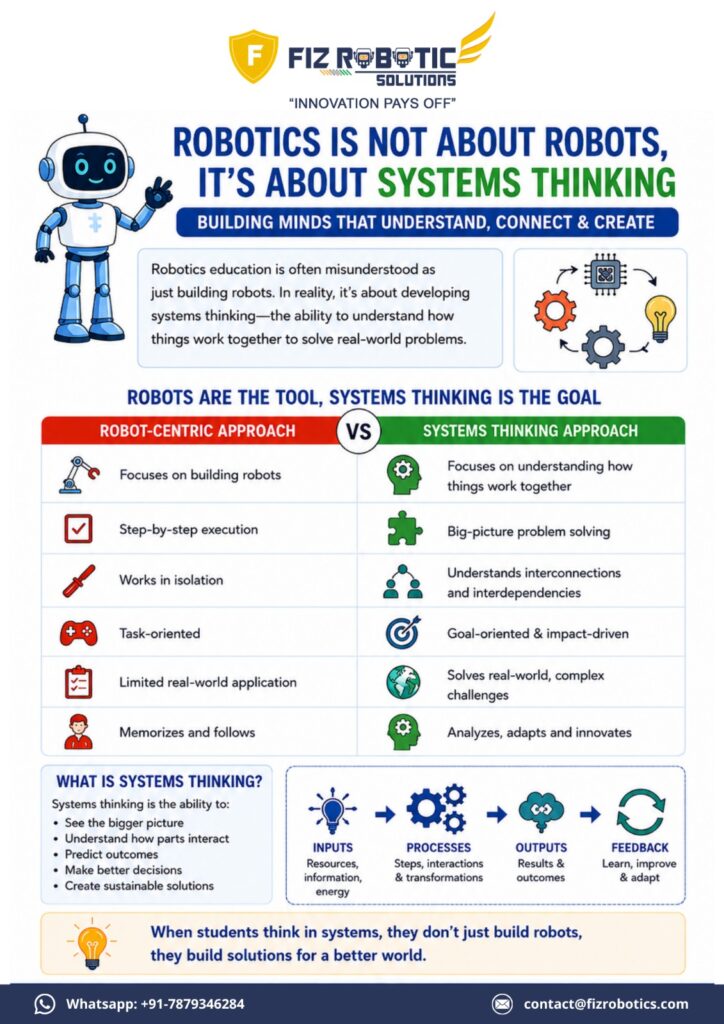
Systems thinking is the ability to understand how different components interact to create a complete solution.
For students, this means moving from:
- “I built a robot”
to - “I understand how inputs, processing, and outputs work together.”
This skill goes far beyond robotics.
For parents, it answers an important concern:
Is my child just learning an activity, or developing real thinking skills?
For school owners, it defines the quality of education being delivered:
Are students building projects—or understanding systems?
Because in today’s world of technology and innovation, success depends on the ability to connect ideas, not just execute instructions.
The Problem with How Robotics Is Often Taught
In many classrooms, robotics becomes a step-by-step exercise.
Students are told what to do:
Connect this. Upload that. Follow these steps.
The robot works—and the session ends.
But what’s missing is the deeper understanding of why each step matters.
Without systems thinking:
- Students struggle to troubleshoot problems
- They can’t modify or improve their projects
- Their learning remains dependent on instructions
This limits creativity and reduces robotics to just another classroom activity.
What Real Robotics Learning Should Look Like
When systems thinking is introduced, everything changes.
Students begin to ask better questions:
- What input is the sensor giving?
- How is the code making decisions?
- Why is the output not working as expected?
They start seeing connections.
They experiment. They fail. They fix.
And most importantly—they learn how to think.
This is what defines the new era of robotics. It’s not about building more robots—it’s about building better thinkers.
How Schools Can Bridge the Gap
To make robotics truly effective, schools need to move beyond activity-based learning and focus on concept-driven learning.
This means:
- Explaining the logic behind every project
- Encouraging students to analyze and modify their work
- Creating an environment where questioning is welcomed
- Connecting robotics concepts to real-world applications
It also requires the right kind of mentorship—guidance that helps students see the bigger picture, not just the next step.
Where the Right Approach Makes the Difference
This is where FRS brings a meaningful shift.
FRS approaches robotics not as a product, but as a learning experience built on systems thinking. Instead of focusing only on outcomes, the emphasis is on understanding the entire process—how each component works and how they come together.
Students are not just guided to complete projects, but to:
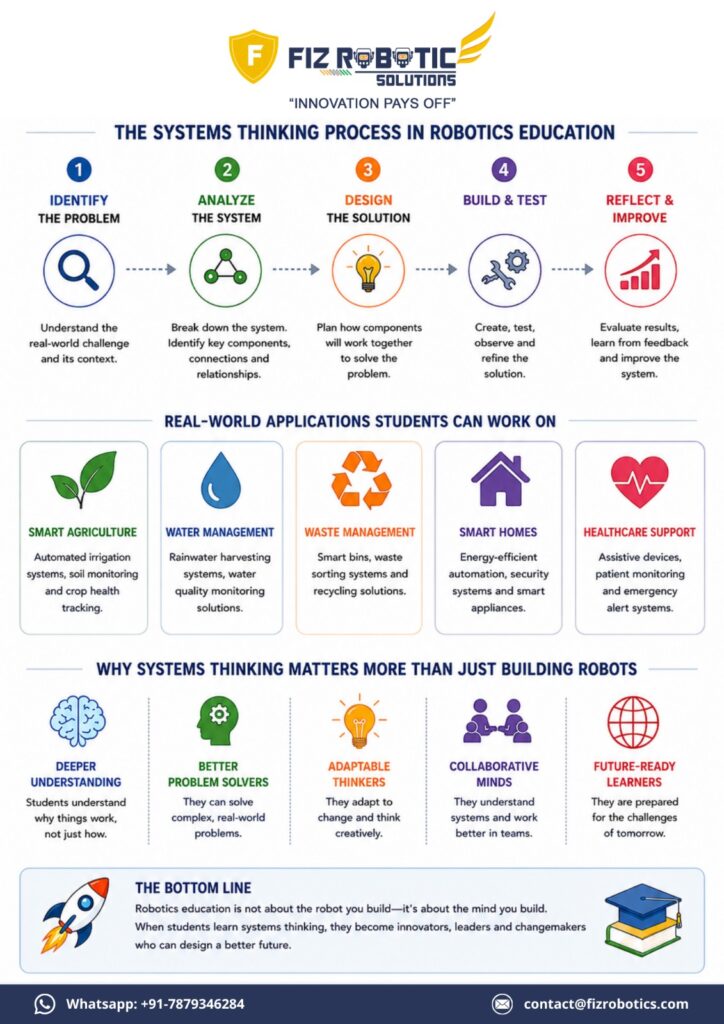
- Break down problems
- Understand cause and effect
- Build, test, and improve their ideas
This approach ensures that learning stays with them—far beyond the classroom.
Preparing Students for a Complex World
The world students are stepping into is interconnected. Whether it’s technology, business, or everyday problem-solving, everything works as a system.
Teaching robotics without systems thinking is like teaching words without meaning.