
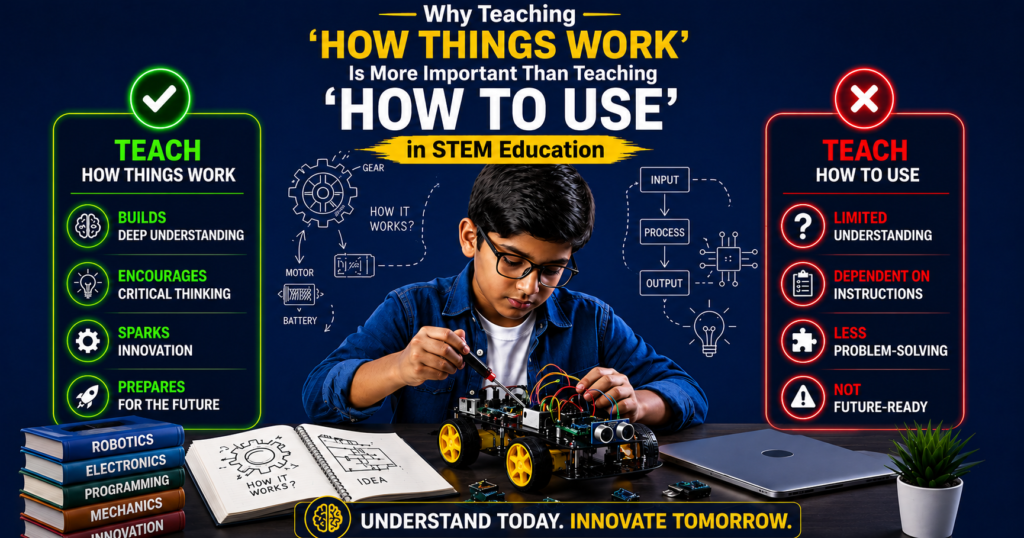
In the evolving landscape of STEM education, classrooms today are filled with robotics kits, coding platforms, sensors, and innovative learning tools. While this transformation signals progress, it also raises a critical concern—are students truly understanding these technologies, or are they simply learning how to use them? In the context of STEM, teaching how things work is far more impactful than teaching how to use them, as it builds a strong foundation for innovation, critical thinking, and real-world problem-solving.
When students are taught only how to use a tool—such as assembling a robotic model or executing pre-written code—they often follow instructions without understanding the underlying principles. This approach may deliver quick results, but it limits deeper learning. In contrast, when students explore how systems function—how sensors collect data, how microcontrollers process inputs, or how motors convert electrical energy into motion—they begin to grasp the logic behind every action. This level of understanding is what transforms basic activities into meaningful STEM education.
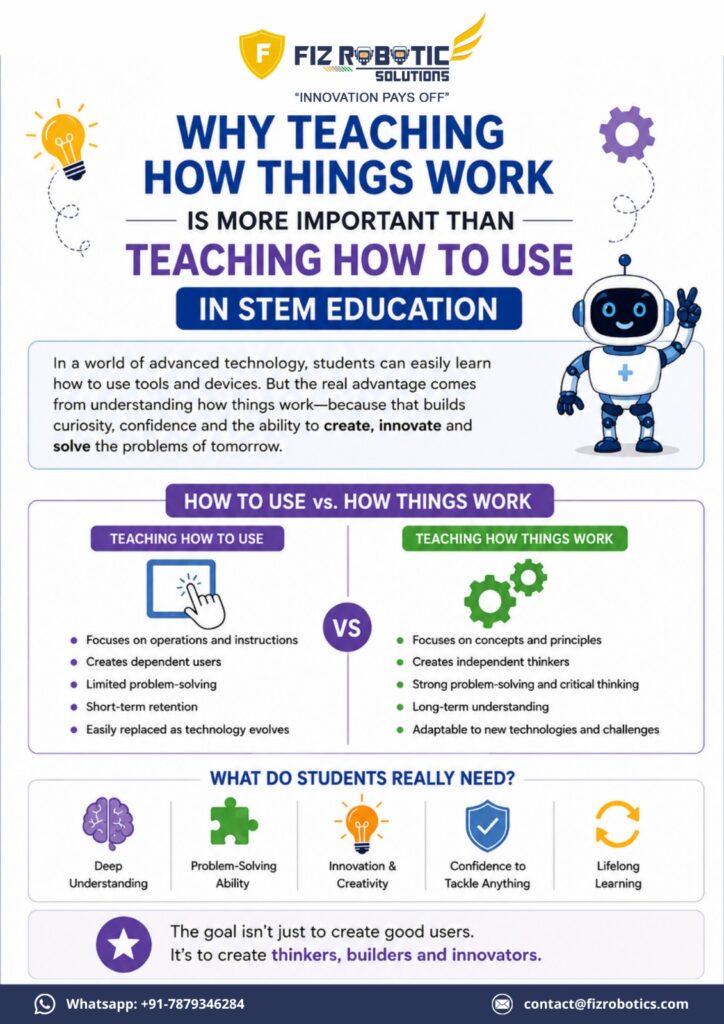
Robotics serves as a powerful platform to implement this approach. A student who simply follows steps to build a robot may complete the project, but a student who understands the working of each component can troubleshoot issues, optimize performance, and even innovate beyond the given design. This shift from instruction-based learning to concept-based learning is essential for developing an engineering mindset—one that embraces experimentation, problem-solving, and continuous improvement.
Teachers play a pivotal role in this transformation. Instead of focusing solely on demonstrating procedures, educators must guide students to question, explore, and analyze. For instance, rather than just teaching how to program a line-following robot, teachers can encourage students to understand how sensors detect contrast and how algorithms influence movement. This approach not only enhances conceptual clarity but also makes learning more engaging and interactive.
Project-based learning further strengthens this philosophy. STEM projects grounded in real-world applications—such as building smart automation systems, designing robotic arms, or creating intelligent mobility solutions—encourage students to apply their knowledge practically. These experiences help learners connect theory with real-life scenarios, fostering skills like logical reasoning, collaboration, and innovation.
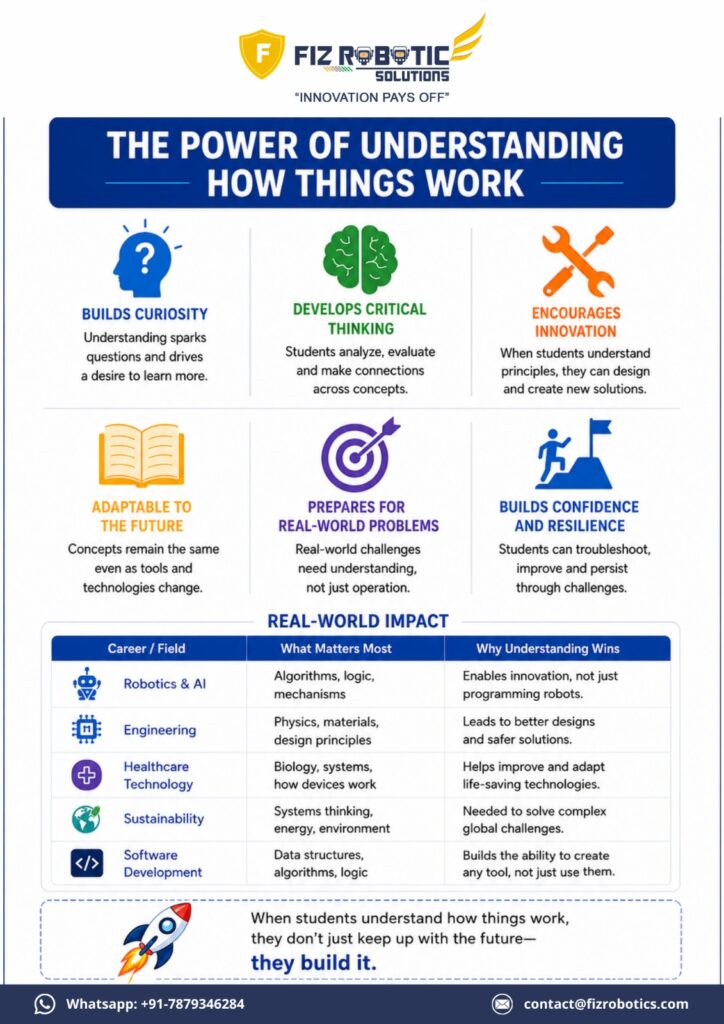
At FRS, we strongly believe that true STEM education lies in understanding, not just usage. Our programs are thoughtfully designed to go beyond conventional teaching methods by focusing on how things work. Through hands-on projects, structured learning modules, and interactive classroom experiences, we enable students to explore the core principles of robotics, electronics, and emerging technologies. Our approach empowers teachers to deliver concept-driven learning while encouraging students to think critically, experiment freely, and build with purpose.
Another key advantage of this approach is adaptability. In a world where technology evolves rapidly, tools and platforms may change, but fundamental concepts remain constant. Students who understand the core principles of STEM can easily adapt to new technologies, making them future-ready. At FRS, we aim to cultivate this adaptability by ensuring that students are not limited to specific tools, but are equipped with knowledge that grows with them.
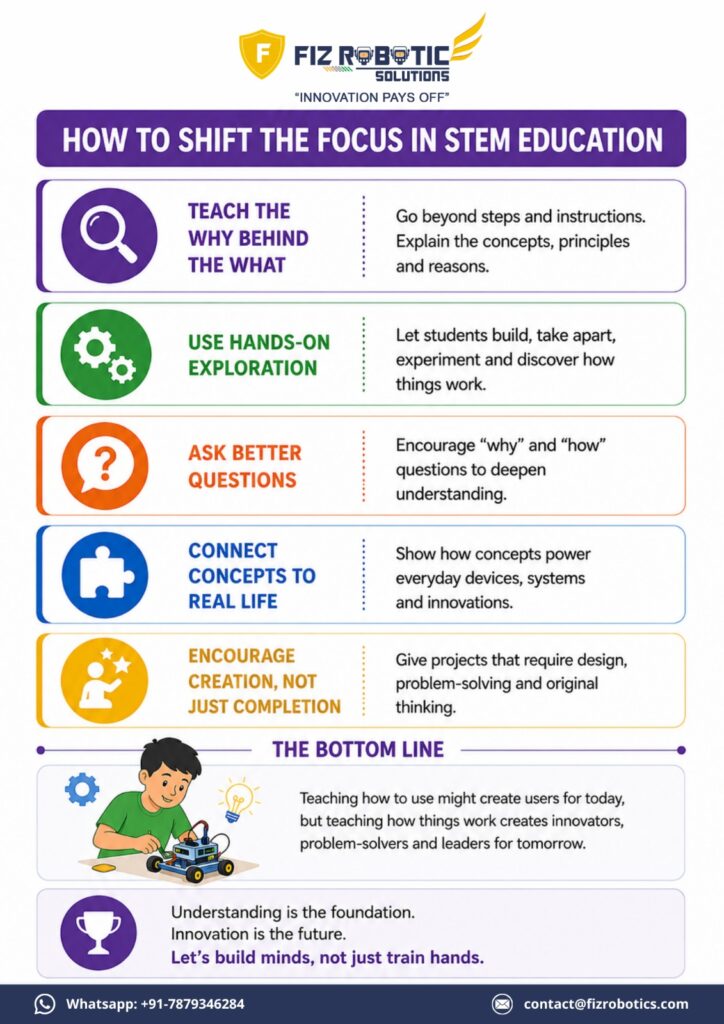
In conclusion, STEM education must move beyond teaching how to use tools and focus on teaching how they work. This shift not only deepens understanding but also nurtures innovation, confidence, and independence among learners. By adopting this approach, educators can transform students from passive users into active creators. With organizations like FRS leading this change, the future of STEM education is not just about learning technology—it is about truly understanding and shaping it.